


Dr. Erjia Ge Explores the Role of Environmental Exposures in Tuberculosis Progression at ISEE 2024 Conference
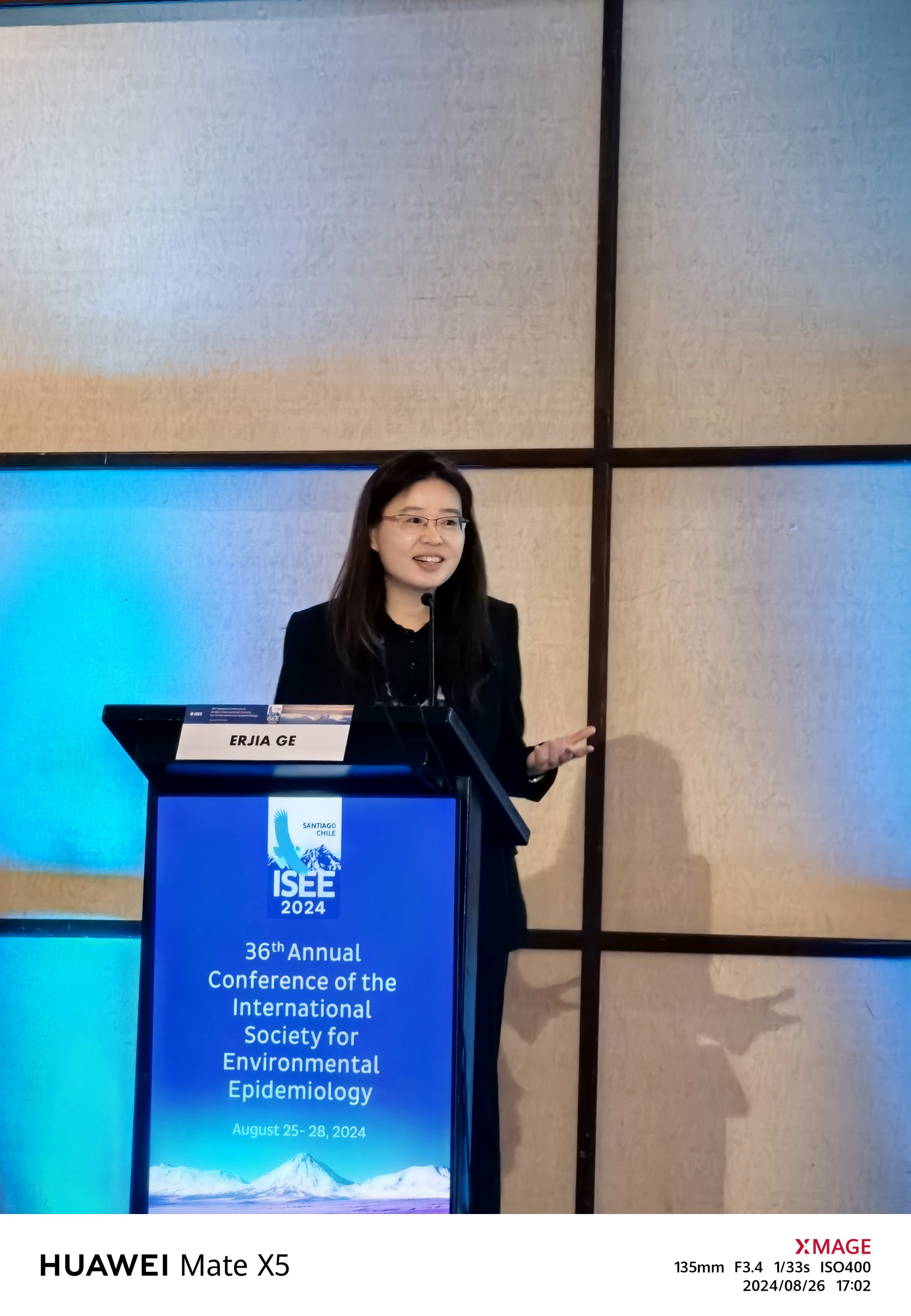
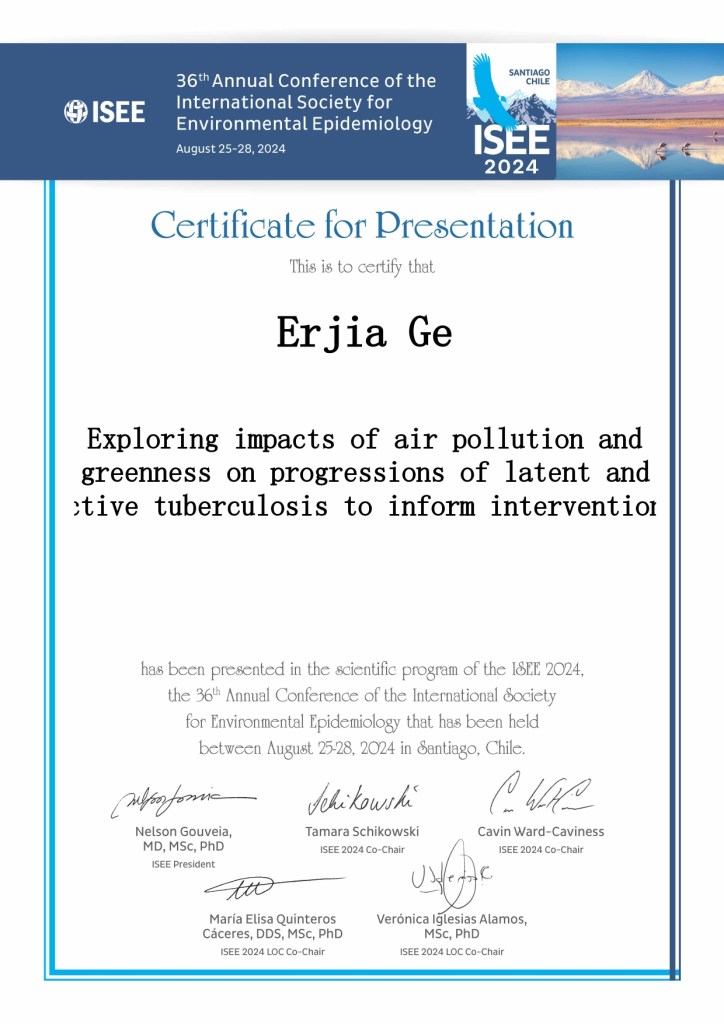
At the 36th Annual Conference of ISEE was held in Santiago, Chile from August 25-29, Dr. Erjia Ge presented her latest research on the effects of environmental exposures on tuberculosis (TB) progression. Titled “Exploring Impacts of Air Pollution and Greenness on Progressions of Latent and Active Tuberculosis to Inform Interventions”, the study focuses on how environmental factors contribute to the progression of latent tuberculosis infections (LTBI) into active TB.
Supported by funding from the Canadian Institutes of Health Research (CIHR), the project leverages a cohort of 140,000 patients with LTBI and integrates data on air pollution, greenness, and various socio-economic and environmental factors from the Canadian Urban Environmental Health Research Consortium (CANUE). The study aims to assess the influence of environmental exposures on the risk of TB progression, providing valuable for potential intervention strategies.
Dr. Ge’s presentation introduced the project’s protocol and its broader implications for researchers working on TB and environmental health. This research underscores the importance of understanding the environmental determinants of infectious diseases, particularly in urban context, and highlights the need for interdisciplinary approaches in tackling global health challenges.
In this presentation, Dr. Ge shared her research regarding the unclear potential for environmental impacts to the progression of TB, including active and latent. This is a CIHR-funded project protocol. Dr. Ge and collaborators linked these cohorts of 140,000 patients, diagnosed with LBTI, with air pollution, greenness, and other environmental and socio-economic data at the Canadian Urban Environmental Health Research Consortium. They aimed to assess the hypothesis that air pollution increases risks of LTBI and TB progressions to activation, recurrence, and death, adjusting potential confounders. Findings of this study will provide evidence to explain associations of air pollution and greenness with TB progressions at all stages for better elucidating whom and where interventions should be targeted, which populations may be more affected by air pollution or more benefit greenness exposures, and where communities may consider reducing emissions, improving green spaces, or both to minimize the health impacts of inequities in environmental exposures
Abstract: This study aims to assess the impacts of air pollution and greenness on progressions of LTBI to active TB, as well as recurrence and mortality progressive from active TB. This study will provide a solid theoretic and data foundation for future studies on the mechanisms through which air pollution could affect TB and related chronic diseases, while reducing the burden associated with TB worldwide.
For more information on this study or collaboration inquiries, please contact our lab at ge.isee2023@gmail.com.
 Ge-iSee Health Lab