


Research at Ge-iSEE
Our research is dedicated to uncovering how environmental factors impact public health, with a focus on identifying key environmental exposures that inform policies designed to improve health outcomes. We work closely with domestic and international collaborators, integrating cutting-edge expertise from fields like Geographical Information Science, Biostatistics, and Spatial Data Science to create innovative, evidence-based interventions that promote the well-being of urban environments and communities.
Our interdisciplinary research spans a wide array of disciplines, including Epidemiology, Environmental Science, Geography, and Molecular Biology. By bridging these fields, we produce diverse and impactful contributions that address pressing global health challenges and foster healthier, more resilient communities.
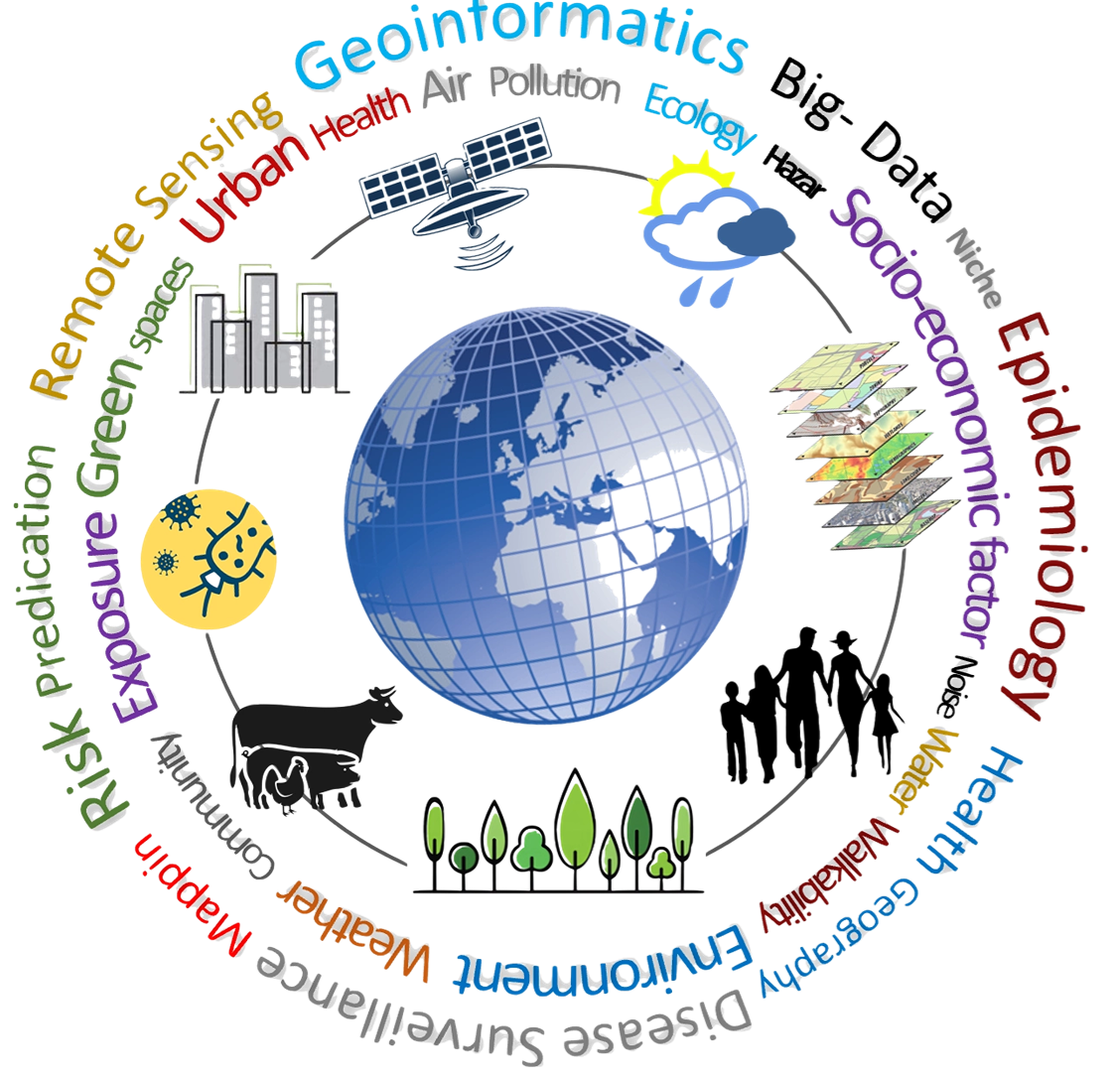
Our Focus
At Ge-iSEE, we undertake pioneering research to address critical public health challenges by focusing on three key areas:
- Building Population-Based Cohorts: We establish comprehensive, large-scale cohorts to deeply investigate the links between environmental exposures – such as air pollution, greenness, noise, wildfire, weather, and extreme environment – and a wide range of health outcomes. These cohorts allow us to identify patterns that inform targeted health interventions.
- Constructing a Large-Scale Data Repository: By integrating diverse data sources – from environmental sensors to health records – we have developed a robust data infrastructure that enables us to study the multifaceted impacts of co-exposures on health. The data repository serves as the backbone for many of our research projects, allowing for nuanced and large-scale analyses.
- Developing Advanced Quantitative Methodologies: We push the boundaries of data analysis by developing cutting-edge statistical and computational tools – from big data analytics and geospatial sciences to artificial intelligence — that enhance our understanding of environmental health risks. These methodologies provide robust evidence to support effective environmental interventions and inform public policies, ultimately promoting healthier and more resilience communities.
For more details about our research, please visit our Projects and Publications pages
 Ge-iSee Health Lab